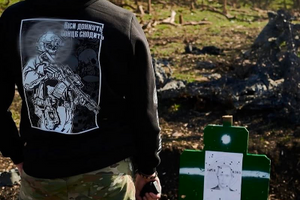
In 2022, "Defend Ukraine" appeared everywhere.
On t-shirts from fast fashion brands. In profile pictures of people who had never cared about Ukraine. In shop windows in Berlin, Warsaw, Toronto. On merch that appeared in a week and disappeared in a month.
We understand it. And at the same time we need to say directly: there's a difference between a trend and a position. And that difference matters.
What a Trend Is
A trend is when it's convenient.
When you add a blue-and-yellow flag to a photo because everyone else is doing it. When the phrase "I support Ukraine" costs nothing — no time, no money, no reputation. When you wear a symbol not because it means something, but because it's "relevant right now."
Trends pass. We've seen this with various movements. A year or two later, the loud consensus quietly dissolves into everyday life. Hashtags disappear. Profile pictures revert. Flags come down from windows.
We don't judge. People are built this way — attention is finite, empathy exhausts itself, living your own life is normal.
But there are those for whom this is not a trend.
What a Position Is
A position is when it's uncomfortable, and you stand anyway.
A position is the guy from Lviv who turned down a job in Poland and joined the territorial defense. Not because he had to — because he couldn't do otherwise.
A position is the woman who has been weaving camouflage netting every Saturday for three years. Without a camera. Without Stories. Without likes.
A position is the entrepreneur who in February 2022 shifted their production to military needs and still hasn't returned to their civilian lineup. It costs him more — but he doesn't see another way.
A position is the teacher who stayed in the city under bombardment because "someone has to teach the children."
Position requires no audience. It exists even when no one is watching.
Why We Use This Phrase
"Defend Ukraine" appeared in our lineup not as a reaction to a trend and not as a marketing move.
It appeared because we are from here. Because our people are here. Because Dnipro is not an abstraction on a map — it's the city where we live, make clothing, and look up at the sky when the air raid siren sounds.
We don't sell patriotism. We wear what we believe in. And if someone buys our piece only because "it's trendy right now" — they might later understand what they're actually wearing. That's fine too. Symbols sometimes arrive before awareness does.
How to Tell the Difference
Ask yourself: what would change in your life if this symbol disappeared?
If nothing — it might be a trend. Or a trend for now. Everything starts somewhere.
If there's a feeling that something important would be lost — something without which it's harder to describe yourself — that's closer to a position.
We're not the judge. Everyone knows where they stand. And which direction they're moving.
But we choose to make clothing for those who have an answer to that question.
Defense Is Not Only a Weapon
"Defend Ukraine" is not a call to join the army. Though it's that too, if you're ready for it.
It's a call not to give up in your own field.
The teacher who keeps teaching — defends.
The doctor who stayed in the city under bombardment — defends.
The journalist who documents and doesn't stay silent — defends.
The entrepreneur who pays taxes and doesn't move money abroad — defends.
The artist, musician, architect, creator — defends the culture without which there is no nation.
Defense is a form of presence. The decision to remain engaged, even when it would be easier to step aside. Even when there's an opportunity to leave and "wait it out."
If this is your position — you know it.
ROWDY COMPANY. rowdy.com.ua